I timed my Bhutan trip around a Tshechu almost by accident. A local guide mentioned dates lining up with a festival at Paro Dzong, and I adjusted my whole itinerary on the spot. That decision turned out to be one of the better calls I made on the entire trip.
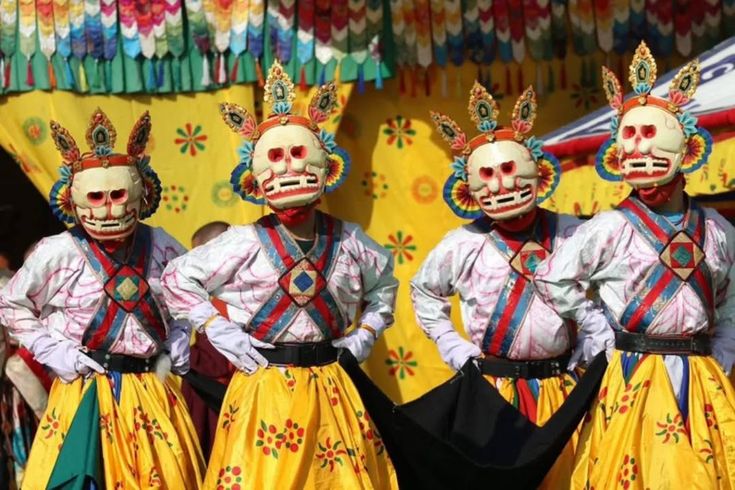
Bhutan holds Tshechu, a religious festival, annually at dzongs and monasteries across the country, celebrating Guru Rinpoche, the 8th-century Buddhist master credited with bringing Buddhism to Bhutan. Each dzong sets its own Tshechu on a different date, tied to the local monastic calendar. So the festival essentially rotates across the country through the year, rather than happening everywhere at once.
The Masked Dances
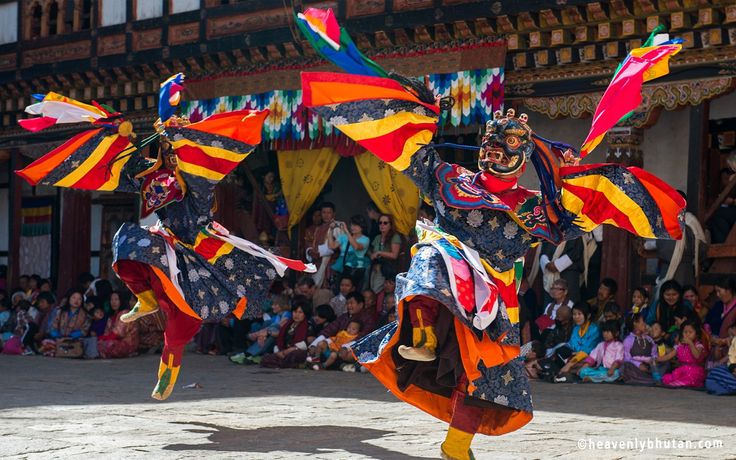
Monks perform Cham dances at the center of every Tshechu, elaborate masked performances, each depicting specific stories from Buddhist mythology and Bhutanese history. The masks themselves are genuinely striking, wrathful deities, animals, historical figures, some towering well above the dancer’s actual head. I watched one dance depicting the subjugation of evil spirits. The monks spun in heavy, elaborate costume for what must have been close to twenty minutes, never breaking rhythm.
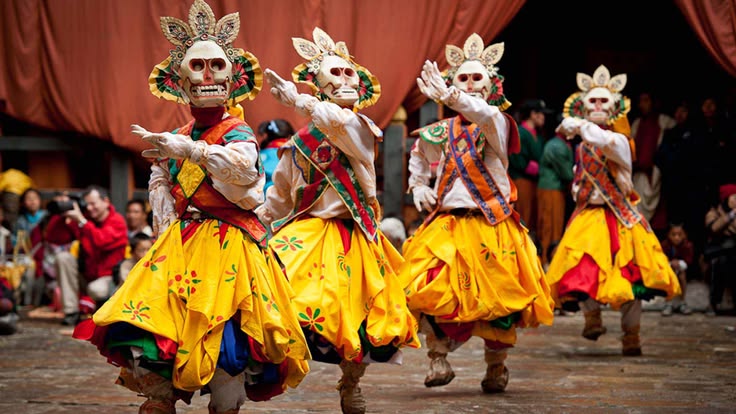
For Bhutanese people, Tshechu isn’t just a cultural show. It carries genuine religious significance. People believe watching the dances brings blessings and merit, and entire families travel from surrounding villages, dressed in their finest traditional clothing, specifically to attend. I noticed elderly attendees watching with an intensity that made clear this wasn’t casual sightseeing for them. It was a meaningful annual pilgrimage to their own local dzong.
The Thongdrel
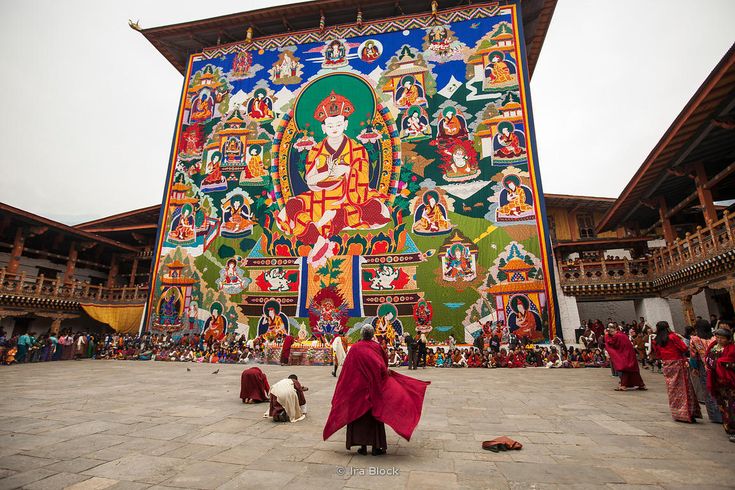
Many Tshechus include the unveiling of a Thongdrel, an enormous sacred thangka, a religious tapestry that monks display only once a year, usually at dawn on the final day. Tradition holds that simply viewing a Thongdrel cleanses sins and brings liberation, and the crowd that gathers for this specific moment runs considerably larger and more devoted than for the dances themselves. I wasn’t prepared for how early people arrived just to be present for this brief unveiling.
Attending as an Outsider
I’ll be honest, as an outsider I didn’t fully grasp every symbolic layer of what I was watching. But the atmosphere alone made it clear I was witnessing something that mattered far beyond spectacle, drumming, chanting, the smell of incense, entire communities gathered in their best clothes. Locals welcomed visitors warmly, but it was obvious this festival exists primarily for them, not staged or adjusted for tourism.
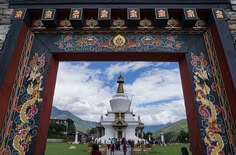
Tshechu dates shift yearly based on the Bhutanese lunar calendar, and different dzongs hold theirs at different times, Paro’s Tshechu typically falls in spring, Thimphu’s in autumn, among others. If experiencing one is a priority, it genuinely shapes when you should plan your entire Bhutan trip, not something to hope coincides with dates you’d already picked.
Why This Changed the Rest of the Trip
Everything else I’d seen in Bhutan up to that point, the dzongs, the monasteries, felt beautiful but somewhat static, buildings and landscapes to admire. Tshechu made the whole country feel alive in a completely different way. Monks still practice this centuries-old ritual exactly as intended, not preserved for display but genuinely lived. It’s the one part of the trip I’d tell anyone to prioritize planning around, even if it means adjusting every other date to fit.
Plan Your Bhutan Trip Around a Tshechu With VedRaahi
Timing a trip around the right Tshechu, knowing which dzong, which dates, and how to attend respectfully, takes local knowledge most visitors don’t have when booking independently.
VedRaahi’s Bhutan trips from India can be planned specifically around Tshechu festival dates, with guidance on which celebration fits your travel window and how to experience it properly.
Book your Bhutan Tshechu trip from India today and witness a festival still genuinely alive, not staged for visitors. Contact VedRaahi to customize your itinerary and travel dates.
For festival calendars and dzong-specific dates, the Tourism Council of Bhutan’s official website is a reliable reference before you go.