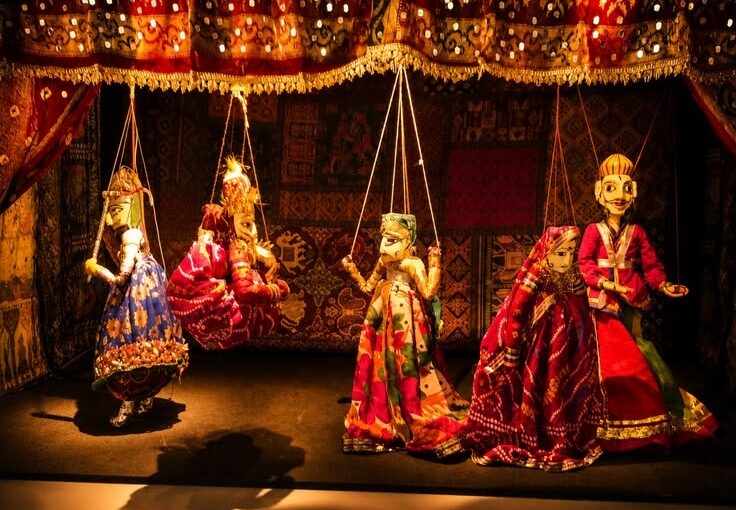
I watched a Kathputli performance in Udaipur almost by accident. I wandered past a small courtyard where a crowd had gathered, and I stayed far longer than I’d planned to. Wooden puppets on strings sound simple enough on paper. What I actually saw was stranger and more skillful than I’d expected, and it sent me looking into where this tradition came from.
A craft tied to one specific community
The Bhat community of Rajasthan traditionally practices Kathputli puppetry. The name itself comes directly from the craft, “kath” means wood, and “putli” means puppet. For generations, this wasn’t a hobby or side craft. It was the primary livelihood for entire families, and they passed the skill down through direct apprenticeship rather than formal training.
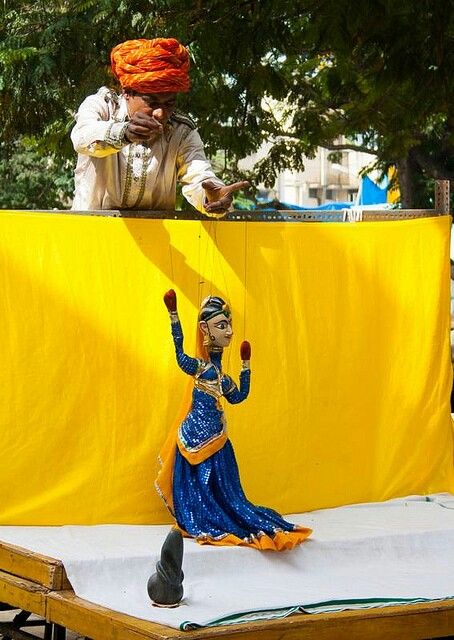
The puppets themselves, and why they look the way they do
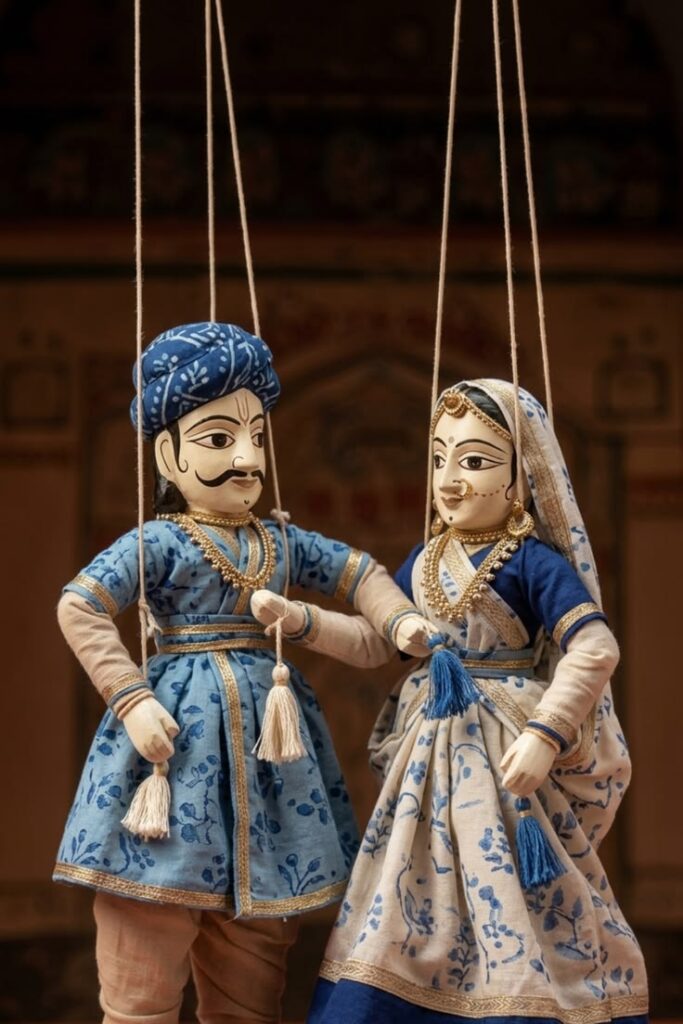
Artisans carve Kathputli puppets from a single piece of wood. They paint them with exaggerated features, large eyes, elaborate mustaches on male characters, and ornate traditional Rajasthani clothing. Many puppet traditions elsewhere use rods for control. Kathputli doesn’t. Puppeteers rely purely on strings, usually just two, tied to the head and waist. That simple setup, in skilled hands, creates surprisingly fluid, almost human movement.
That voice, and why it’s genuinely unusual
Here’s the detail that actually stopped me mid-watch. Traditional performers use a vocal technique called “boli.” They hold a small reed instrument in their mouth, and it produces a distinctive, almost squeaky voice for the puppets. It’s not what you’d expect from a human narrator. It sounds deliberately artificial, and once you hear it, you can’t really unhear it. That voice becomes inseparable from the whole experience.
Traditional performances draw heavily from Rajasthani folklore and history. Puppeteers tell stories of local kings, legendary heroes like Amar Singh Rathore, and moral tales passed down through generations. These aren’t randomly assembled skits. They carry specific regional history and cultural memory. The format was designed to entertain while keeping these stories alive for generations who might otherwise never hear them.
A Tradition That Nearly Disappeared
Like several regional craft traditions in India, Kathputli faced serious decline. Television and other entertainment reduced demand for traveling puppet shows, which once served as a primary source of village entertainment. Many practicing families shifted away from the craft entirely. The number of genuinely skilled traditional puppeteers has dropped significantly compared to previous generations.
Where it’s finding new life
Despite the decline, Kathputli hasn’t disappeared. Cultural centers, tourism-focused performances in cities like Udaipur and Jaipur, and government-supported craft initiatives have helped keep the tradition visible, even as its original village-touring format has largely faded. Some artisans have also adapted, incorporating contemporary stories alongside traditional folklore to keep performances relevant to newer audiences, a deliberate effort to bridge an old craft with modern appeal.
Why watching one in person matters
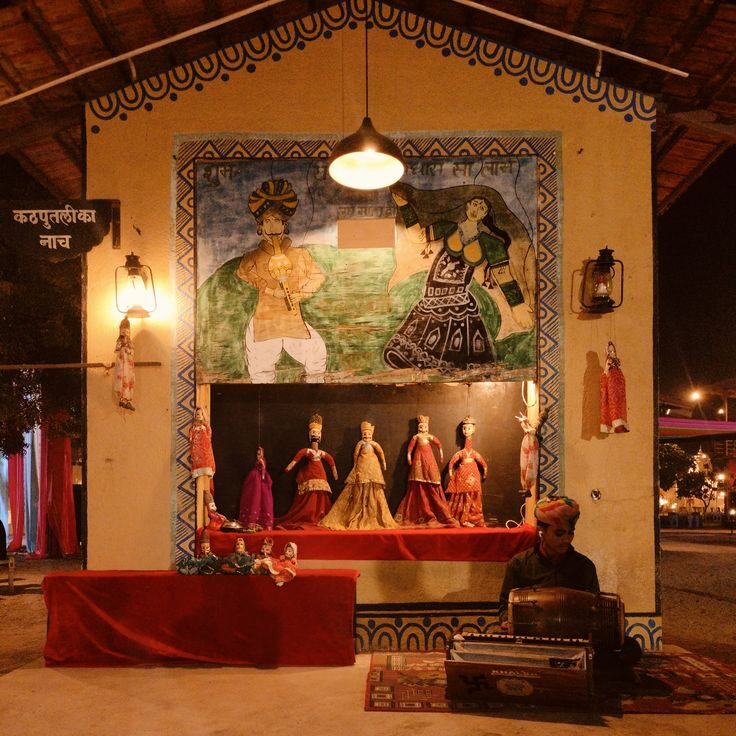
Photos and videos of Kathputli genuinely undersell the craft. It’s the small, specific movements, a puppet’s head tilting at exactly the right moment, that reveal just how much skill goes into controlling a wooden figure with nothing but two strings and years of practiced technique. Watching it live, in the specific voice, the specific rhythm of a puppeteer who’s likely learned this from a parent or grandparent, carries a weight that a recorded clip simply can’t replicate.
See Kathputli Performed With VedRaahi
A lot of visitors walk past a Kathputli show without realizing they’re watching a centuries-old craft tradition performed by artisans keeping it alive against real odds.
VedRaahi’s Rajasthan trips from Pune include stops for authentic Kathputli performances alongside the region’s forts and palaces, with context on the tradition’s history, not just a passing photo opportunity.
Plan your Rajasthan cultural trip from Pune today and see Kathputli the way it’s meant to be experienced. Contact VedRaahi to customize your itinerary and travel dates.