I’d heard the word Theyyam thrown around a few times before I actually understood what it meant. It’s not a dance, and it’s not quite a performance either. The people watching genuinely believe it’s a temporary transformation, a human performer becoming the literal presence of a deity, right there in front of you. I didn’t fully grasp that until I sat through one myself, in a small village in North Kerala, and it’s stayed with me longer than almost anything else I’ve witnessed on a trip.
What Theyyam actually is
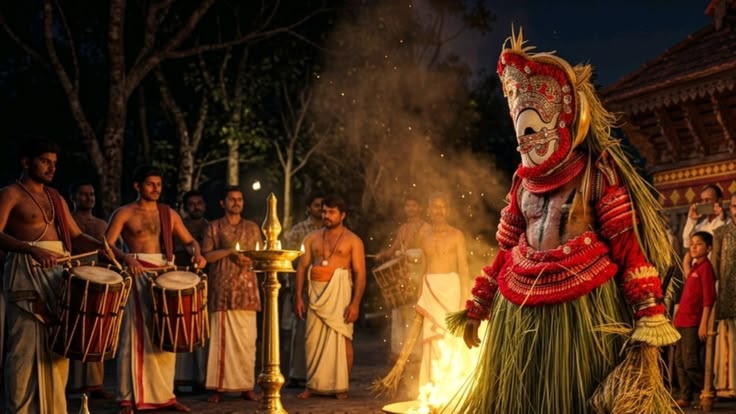
Performers practice Theyyam predominantly in North Kerala, particularly around Kannur and Kasaragod districts. Almost always men from specific communities take on the role, undergoing elaborate costume and makeup transformations to embody deities, ancestral spirits, or folk heroes. This isn’t theater in the way most people understand performance. Within the ritual context, both performer and audience genuinely believe the deity has entered and now inhabits the performer for the ceremony’s duration.
The Transformation, and Why It Takes Hours
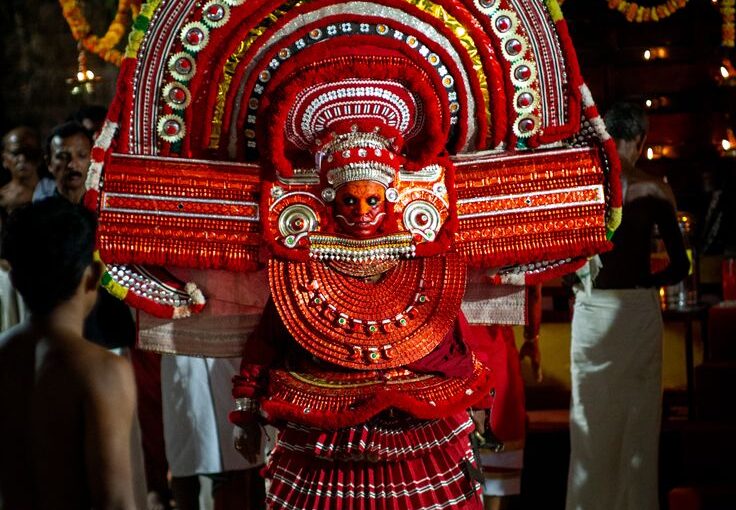
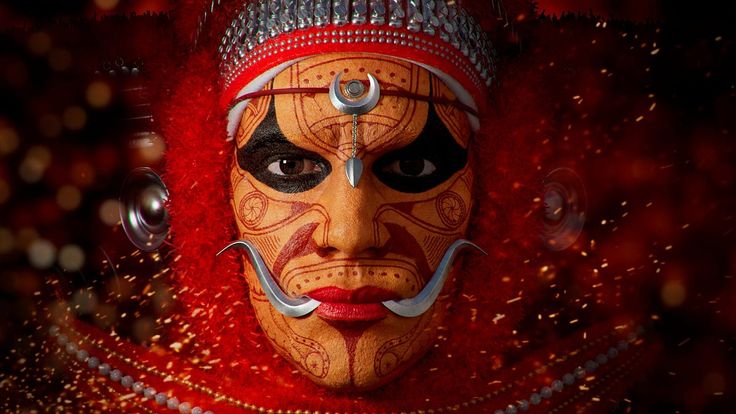
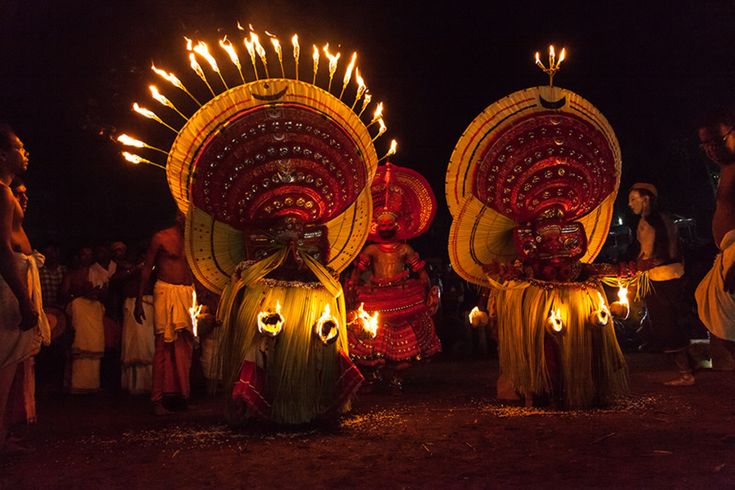
What struck me most wasn’t the performance itself, it was the preparation. Performers spend hours, sometimes most of a day, applying elaborate face paint made from natural pigments. They construct towering headdresses and dress in costumes that can be genuinely massive, some Theyyam forms involve headgear extending several feet into the air. Watching this preparation happen slowly, methodically, felt like watching someone deliberately shed their ordinary identity before stepping into something else entirely.
The moment of transformation, and why the crowd reacts the way it does
Once fully costumed, the performer enters a trance-like state, usually through rhythmic drumming and chanting that builds in intensity. At a certain point, the moment considered the deity’s full arrival, the crowd’s entire demeanor shifts. People who’d been chatting casually moments before suddenly turn genuinely reverent. Some prostrate. Others approach for blessings, treating the performer with the same devotion they’d show an actual deity in a temple. I watched this shift happen in real time and found myself instinctively going quiet along with everyone else, caught up in something I didn’t fully understand but could clearly feel.
Different Theyyams, different stories
Theyyam isn’t just one ritual, it’s hundreds of distinct forms, each tied to specific deities, local legends, or historical figures. Some connect to nature worship, others to ancestral spirits or folk heroes from regional history. Each version carries its own costume style, movements, and ritual sequence, so no two Theyyam performances play out quite the same, even within the same general tradition.
A tradition tied closely to caste and community
Performers traditionally come from specific communities, often ones historically marginalized within the broader caste system. The ritual carries real social significance here. Within the ritual space, people treat performers embodying deities with reverence regardless of caste, a temporary inversion of typical social hierarchy that scholars and community members alike consider a significant, layered part of the tradition’s meaning.
Where and when to actually see one
Theyyam season generally runs from October through May. Performers stage it at specific village shrines called kavu, often as part of local temple festivals rather than for tourists on a fixed schedule. Seeing one requires some local knowledge and timing, often travel to smaller villages rather than well-known tourist circuits. That effort is part of what makes witnessing it feel genuinely earned rather than curated for visitors.
Why this stays with people longer than expected
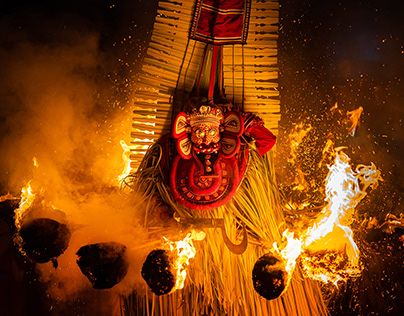
I’ve seen plenty of cultural performances that were impressive, skilled, memorable in the moment. Theyyam feels different because of what the audience believes is actually happening. They’re not admiring a skilled performer, they’re witnessing what they consider a genuine, if temporary, divine presence. That collective belief, more than the costumes or the drumming, is what made the whole experience feel like something I’d stumbled into rather than simply watched.
Witness Theyyam in Kerala With VedRaahi
Theyyam doesn’t run on a tourist-friendly schedule. Seeing one means knowing which village shrine, which festival dates, and how to approach the ritual respectfully as a visitor.
VedRaahi’s North Kerala cultural trips from Pune include guided access to genuine Theyyam performances, timed around actual festival calendars rather than staged tourist versions.
Plan your North Kerala cultural trip from Pune today and witness Theyyam as it’s meant to be experienced. Contact VedRaahi to customize your itinerary and travel dates.